May 15 2013

Instruction Manual and Pre-firing

The Instruction Manual for Hadar’s clay is now updated and marked May 15, 2013.

Besides adding instructions for firing Smart Bronze, changes have been introduced throughout the Instruction Manual. I recommend reading it through when you get a chance, since it may shed some light on your personal experience.

I would like to share with you my experimentation with pre-firing.

First, not all clays require pre-firing. White Bronze, Smart Bronze (up to a certain thickness) and Low-shrinkage Steel XT do not require pre-firing. Steel, decorated with copper and/or Bronze XT, also does not require pre-firing.

Doors

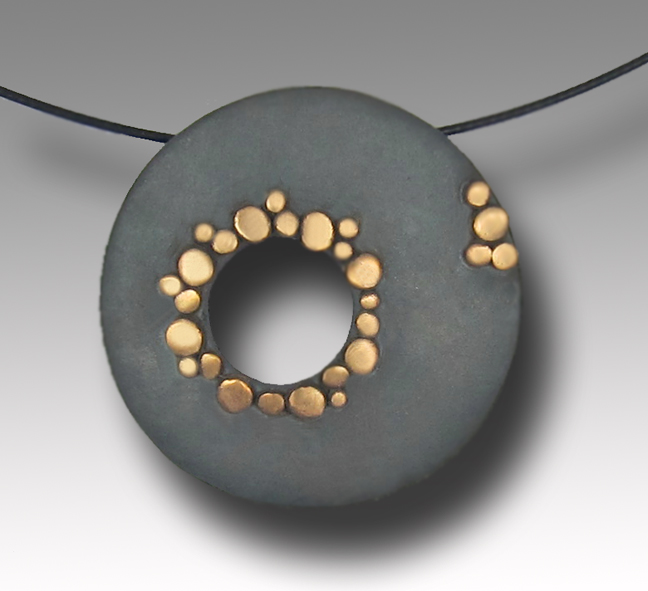
White Bronze

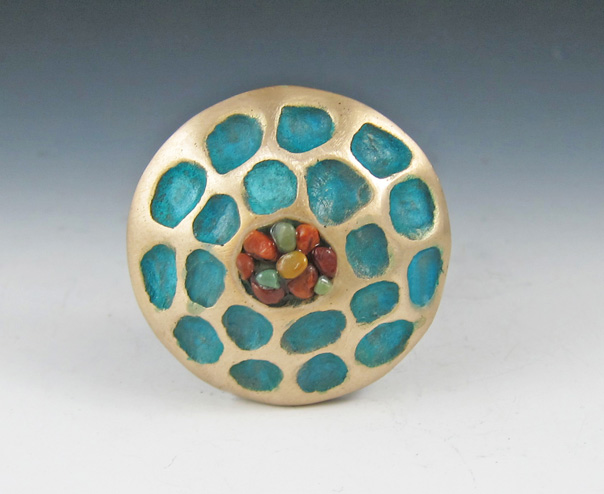
Smart Bronze with Aquamarine

Smart Bronze

Pentagon

Low-Shrinkage Steel XT

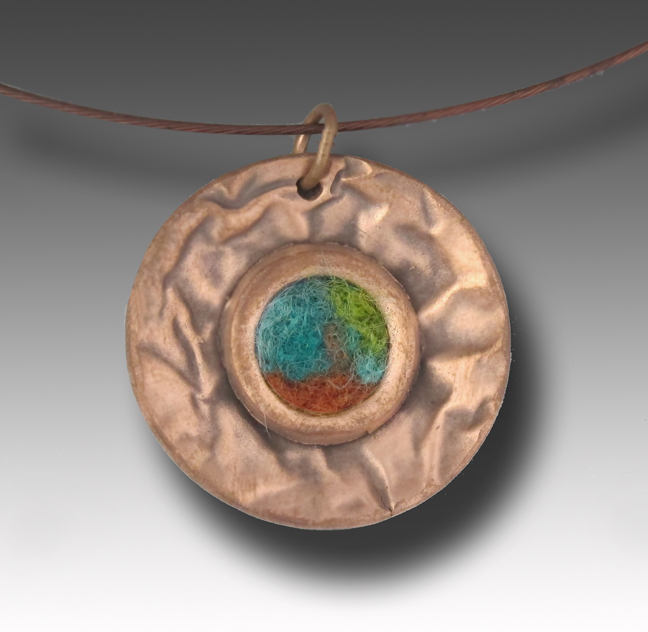
LS Steel XT + copper/Bronze XT Overlays

Low-Shrinkage Steel XT with overlays of copper and Bronze XT

Copper and the rest of the bronzes do require pre-firing. Firing longer hours and/or ramping slower has never worked for me. Recently I have done some more experiments with pre-firing in the kiln instead of on the stove-top. Here is what I did:

Brick top-loader kiln

I placed a bowl inside the kiln with copper and bronze pieces resting on top of carbon. Set the kiln to mid-fire schedule.

In the kiln

In the kiln, set to mid-fire schedule

As the kiln reached 500°F I opened the lid to check on the pieces. I kept checking every 100°F. At 800°F pieces started to smoke and turn black.

Smoking

Smoking

Getting black

Getting black

At 1000°F the smoke was gone and the pieces were all black. I carefully turned the pieces over with a spoon to see if they are black on the other side.

Turning over

Turning over with a spoon

The other side still not black

The other side still not black

This one too

This one too

They were not, but they turned black within seconds. I covered them with carbon, closed the door, and let the kiln complete its cycle. Worked great. 2:45 minutes from beginning to end. If the pre-firing is done on a stove-top, this is the time it takes for the second phase alone. So firing this way is shorter and easier than on a stove top.

Covering with carbon

Covering with carbon

If you happen to walk away while the kiln is ramping and come back after it reached 100°F, no problem. Pieces are probably all smoked up and ready for more carbon. Oxidation will not happen if it’s under 1:00 hour, and even if it does, it will be reversed while the pieces are fired inside carbon.

Turning the pieces over is a good idea. Also, it doesn’t matter if the vent hole is open or closed.

Muffle, front-loader kiln

I tried the same thing in a muffle kiln. Surprisingly, the pieces did not show a sign of smoke until the kiln reached 1200°F. At this point the carbon was already on fire. Since it was a front loader, I had to take the bowl out of the kiln to cover the pieces with carbon, which was awkward at this high temperature. And after the second phase, the pieces were not sintered.

I am guessing the reason is the fast ramp of this type of kiln. The chamber got hot, the outside of the pieces got warm, but the inside needed more time. So slowing the ramp may be the answer.

But then I found out something else. I know that firing twice always works, so I tried it again, but with less time. I fired the pieces in carbon at 1510°F for 1:00 hour. It took 1:20 minutes. Took the bowl out of the kiln and cooled the bowl and the kiln under 100°F. Put it back for another hour, and it worked. Another 1:20 hours, plus cooling time. A little longer, but less messy and more successful.

In fact, the easiest way for me to fire in a front loader was to fire 1:00 hour before I went to sleep. In the morning the kiln was cold so it wasn’t necessary to take the bowl out. Didn’t even open the kiln. Just fired one more hour.


May 5 2013

Free Project for Smart Bronze – Solid Ring

New media seem to bring new inspiration. I’ve always leaned toward hollow forms. It never occurred to me that I could work with solid forms, mainly because I was put off by their weight. As it turns out, Smart Bronze is very lightweight after it’s been fired (although not as light as Low-Shrinkage Steel XT), so I decided to give it a try. Once I started, the possibilities seem endless.

Here are instructions for making this ring.

Garnet and Sapphire

The ring weighs 11 grams after firing. The instructions are long, but only because they are very detailed. It’s actually pretty simple.

1. From the ring sizer, pick a ring that is 2½ sizes bigger than your desired size. Trace the inner diameter of the ring with a pencil. (Tip: if you don’t want to separate the ring from the sizer, do it on a corner of a table; this is the only way it’s going to lay flat).

Trace inner diameter

2. Find a tube whose outer diameter is the same as that of your traced circle.

Find a tube

Or: Find a circle template with the same diameter.

Find a circle template

3. Here is the template for the ring:
Template

4. Roll a large layer of Smart Bronze 3 craft sticks thick (18 cards). Cut a circle in it using the tube or the template.
Cut a cricle

Cut a circle

5. Remove the circle. Place the template on top of the layer.

Template on layer

6. To cut the shape of the ring, it’s better to use cutters rather than a knife. Using cutters will help ensure that the cross sections are vertical. Pick a circle or oval cutter that fits the curve on the top right of the ring. Cut this section out.

Cut section out

Cut section out

7. Use a tissue blade to cut the next straight line.

Cut line with tissue blade

8. Use circle cutters to cut away the excess from the layer on the right and left side of the template.

Remove excess with circle cutters

Remove excess with circle cutters

9. Remove the template. If you used a tube to cut the shank, put it back in the hole. This will help prevent the circle from distorting while drying.

Return tube to hole

10. Dry the ring thoroughly, then sand it smooth.

Sand it smooth

11. While the ring is drying, set the stones. You can use any fireable stones. I used an oval natural sapphire and a square natural garnet. For the oval stone, press the stone into a thick patty of clay. Squeeze a drinking straw into an oval shape and cut an oval around the stone. Dry, then sand the bezel to the perfect oval shape.

Set the stones

12. Set the square stone the same way, only use the scraper to cut the bezel around it.

Setting the square stone

13. Attach the bezels to the ring with thick paste. Dry.

Attach bezels to ring

14. Place the ring in carbon, on top of thin fiber paper. Place a piece of fiber paper on top of the shank as well. Cover with carbon, and fire.

Brick kiln: ramp at 1400°F/778°C per hour to 1440°F/782°C. Hold 2 hours.
Muffle kiln: Ramp at 1400°F/778°C per hour to 1490°F/810°C. Hold 2 hours. Make sure the overall ramp time is at least 1:00 hour!

15. After firing, finish the ring following the instructions in the document entitled “Finishing Fired Metal Clay,” available on the right-hand panel of this blog. You can polish it to mirror shine.

Finished ring

Finished ring

Finished ring


Apr 30 2013

Smart Bronze is Now Available

Hollow ring with inset natural garnet and sapphire

Hollow ring with inset natural garnet and sapphire

Half round ring with inset CZ

Hollow ring with tourmaline

Hollow ring with tourmaline

Smart Bronze is now available on our online store. This new variety of Hadar’s Clay can be fired in a single phase and has a color very close to 24K gold. Please see photos in my blog posting from last week.

Here is the firing schedule for Smart Bronze:

Brick kiln: ramp at 1400°F/778°C per hour to 1440°F/782°C. Hold 2 hours.
Muffle kiln: Ramp at 1400°F/778°C per hour to 1490°F/810°C. Hold 2 hours.

All other firing instructions, such as firing vessel, carbon, etc,, are the same as for the rest of Hadar’s Clays and can be found in the instruction manual on the right panel of this blog.

The ramp time makes sure that the kiln takes at least one hour to reach the hold temperature. Some kilns ramp very slowly and may not need to ramp at less than full speed. I suggest that you set up your kiln to the hold temperature at full speed and see how long it takes. If it takes about an hour, adjust your schedule to full speed. If it takes less than one hour, experiment with slowing the ramp until you reach the speed that will take one hour.

As with all other clays, make test pieces before firing actual pieces of jewelry to find the correct hold temperature for your kiln. Make a few pieces, 6-8 cards thick, and fire. If they blister, drop the temperature by 5°F/2°C. If they look smooth, sand them with course sandpaper. If the surface becomes metallic with no traces of powder, the piece is sintered and temperature is fine.

Shrinkage: Flat pieces shrink by 23.5%. Rings shrink 2½ sizes.

Here is a photo comparing the color of Smart Bronze to Brilliant Bronze. Smart Bronze is the “bean” on the right.

The last page of the instruction manual has been updated to include the firing schedule. The rest of the manual will be updated once the compatibility of Smart Bronze with other metals will be tested. However, this is not a priority; the unique color of Smart Bronze, as well as Brilliant Bronze, shows best when it is fired on its own, not in combination with other colors. The simple firing schedule makes it a good choice for beginners and teachers who study and teach the basics of metal clay.


Apr 28 2013

Map of Hadar’s Clays

There is some confusion about the different varieties of Hadar’s Clay. I am often asked what does XT mean, what is the difference between Traditional and Quick-fire, etc.

For your convenience, I’ve uploaded to the right panel of this blog a file called “Map of Hadar’s Clays“, hoping it will clear up some of the confusion.

In general, Hadar’s Clay products are divided to 2 main groups: Quick-fires and Flex (also called Traditional; the term Traditional is being gradually taken off the label and will no longer be used).

The Flex group are clays with a very specialized application: making flexible clay. These clays, when mixed with glycerin, stay flexible after they are dried, with the consistency of leather. They clay can be cut, woven, folded, and knotted. Projects for flexible clays can be found in my book: The Handbook of Metal Clay: Textures and Forms (second edition). These clays also work very well with the Silhouette machine. The machine cuts shapes out of them without breaking sheet that it fed into it.

All Flex clays require pre-firing, or firing in two phases.

The Quick-fire group includes the rest of the clays. Some of them require pre-firing and some don’t. With addition of glycerine they will be somewhat flexible after drying but not nearly as much as the Flex clays.

Both groups are further classified according to their firing schedules. The Flex group includes clays which fire at mid- and high-fire schedule; the Quick-fires also include a clay with low-fire schedule – White Bronze – and a new clay which fires between low-and mid-fire schedule – Smart Bronze.

The symbol XT simply means that the clay is a later formula. For example, Quick-fire Bronze XT was developed after Quick-fire Bronze; it is a high-fire bronze which can be fired in combination with steel.

Quick-fire clays that do not require pre-firing (one-phase firing) are White Bronze, Smart Bronze, and Low-Shrinkage Steel XT.

The second page of the map classifies combinations of clays according to their firing schedules. It shows which clays can be fired in combination with others, and at what firing schedule.


Apr 24 2013

Meet Smart Bronze

Thank you for all your supportive comments on my last blog posting. I’d like to address some of your questions here.

Smart Bronze is a new clay in the Hadar’s Clay family. It is a copper alloy which, after firing, has the color of 24K gold. The shrinkage is 23.5% for flat pieces and 2.5 sizes for rings. Since it is base metal, it needs to be fired in carbon, but DOES NOT REQUIRE PRE-FIRING! It can be fired in one phase just like White Bronze and Low-shrinkage Steel XT. The firing temperature is lower than mid-fire schedule. Small batches can be fired for one hour only. It will be released next week with specific instructions. The Instruction Manual will be updated after testing some compatibility options with other metals.

Smart Bronze is a great option for beginners and teachers of metal clay, as well as experienced artists.

Here are some photos.

Hollow bean

This hollow bean was polished to mirror shine. I took some photos to show the reflection:

Reflection 1

Reflection 2

Pendant

Fishies

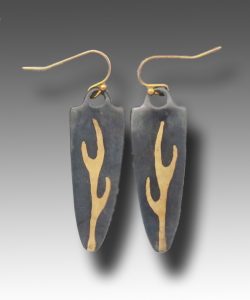
Trees

Elipse

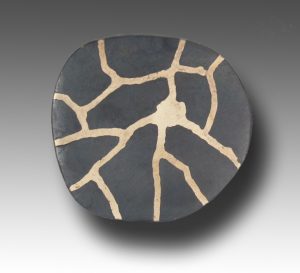
Cracked Strip

Pear Shaped

Moonlit Tree

Heptagon

Treescape

Jewel Anemone

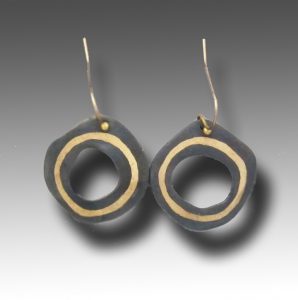
Holey

Cracked Pendant


Apr 22 2013

What Would You Say?

What would you say if someone told you there was a clay, the color of 24K gold after firing, with a pleasant, workable consistency, no need for pre-firing, and a strong, malleable result after firing?

Please leave your comment below: What would you say? Could you get friendly with a clay like that?

What Would You Say?


Apr 16 2013

Accreditation Program for Hadar’s Clay™ Teachers – Follow-up

The first round of the Accreditation Program for Hadar’s Clay™ Teachers began operations over a month ago. Upon acceptance to the program, participants were enrolled in a closed Facebook group which consists of fifty members from the US, the UK, Austria, the Netherlands, Sweden, Norway, Germany, Canada, Mexico, and Australia. Over the past month the group has become highly active and engaged, both professionally and socially.

Every two or three weeks the group is given an assignment, which comes in the form of questions and/or projects. Each assignment or group of assignments covers a specific topic. The answers are submitted to me via email, and then I post my own answer, as well as the next assignment. For help in answering the questions and assignments, members can rely on written and otherwise published resources, as well as on each other. They are encouraged to discuss the issues raised in the questions openly on the group. No one is criticized for not knowing the answer; what is important is active participation and the way the available resources are used to answer the questions. Members can point each other in the direction they think is right. This is not a competition, but a learning process. No one but me sees the emailed answers, and there is no grading. The learning process is based on guided experimentation.

The program ends at the end of the year, with a 5-day hands-on workshop. The duration of the program is almost one year.

The concept is somewhat unusual, but the members have adjusted quickly and are actually having a lot of fun. Very few people withdrew from the program, the main reason being that their schedule does not permit this kind of ongoing commitment at the present time.

In early 2014 I will start a second round of the Accreditation Program. Unlike the first one, which has been by invitation only, anyone can apply for the 2014 program by contacting me. There are a few requirements:

1. Having taken a class or classes with me
2. Proven familiarity with my books, the Instruction Manual for Hadar’s Clay and related files published on my blog
3. Proven experience with Hadar’s Clay
4. Proven experience with the finishing process
5. Willingness to dedicate the time and effort required to complete the program

For more information about the program please read my previous posting about the Accreditation Program.


Apr 2 2013

Free Project – Bulls Eye Earrings Without Caning

These bulls eye earrings are made without using a jellyroll or an extruder, but with a technique called “onlay,” which I am currently working on with my first group of accredited teachers for Hadar’s Clay.

Materials: Quick-fire copper, quick-fire bronze, and Low-shrinkage Steel XT.

Special tools: you will need a few square cutter tubes in different sizes. Any other shape will do as well.

1. Roll a large layer of copper clay, 8 cards thick.

Step 1

2. Roll a layer of bronze, 2 cards thick.

Step 2

3. With the biggest square cutter, cut two squares off of the bronze layer.

Step 3

4. Lay the squares on top of the copper layer, at a significant distance from each other (you are making both earrings at the same time).

Step 4

5. Using a glass or clear plastic board, press on both squares until they are flush with the copper layer.

Step 5

6. Remove the board. You can smooth the surface gently with your fingers.

Step 6

7. Cut two smaller squares from a 2-card layer of steel. Place them on top of the bronze squares.

Step 7

8. Repeat step 5 with the board.

Step 8

9. Repeat step 7 and 8 with smaller copper squares.

Step 9

10. And again, with smaller bronze squares.

Step 10

11. And last, with smaller steel squares.

Step 11

12. Cut the copper backing layer into equal squares.

Step 12

13. Insert a bronze embeddable at the top of each earring.

Step 13

14. Dry, then sand lightly, since the onlays are very thin now. Fire at mid-fire schedule.
15. finish the earring following the instructions in the document entitled “Finishing Fired Metal Clay,” available on the right-hand pane of my blog.

Onlay Bulls Eye


Mar 29 2013

My NEW EMAIL ADDRESS

Hello, everyone.

My EMAIL ADDRESS HAS CHANGED, effective immediately. The new email address is:

hadarjacobson@gmail.com

I will update this reference shortly on my blog, website, store, Facebook page and forums.

Please update your records accordingly. The old pacbell.net account will now forward email to the new address for the time being and provide an auto-response reminding you of the new address, but this is only a temporary measure.

I am now responding to emails that were sent to me while my account was unavailable. Thanks for your patience during this transition.

My best,
Hadar


Mar 29 2013

Issues with My Email Account

Hello, everyone.

Some of you may have received one or more spam emails sent from my email account. My account was hacked during the night. I apologize for any inconvenience.

I am currently unable to send email or respond to emails, and I have been told by my Internet provider that the issue may take 24 hours to resolve, so please know that I am not ignoring your emails. I will send another update once there is a resolution, and will respond to your emails as soon as possible.

Thanks,
Hadar